
Magazine recognizes employers who go above and beyond

October 27, 2011

A Canadian safety magazine has announced its first annual list of Canada’s Safest Employers. I was curious to find out more about who is on the list, how they were chosen, and why the magazine decided to start a new award program, so I emailed Mari-Len De Guzman, editor of Canadian Occupational Safety to find out more.

“We wanted to create a national recognition program for companies that deserve to be acknowledged for going above and beyond in promoting health and safety in the workplace,” Mari-Len said, via email.

In its first year, the contest attracted more than 100 employers whose nominations were judged by a a panel of reps from Canadian workplace safety organizations, including WorkSafeBC.

Social media shout-out

Many of the nominees responded to a call for nominations on the COS Online website www.cos-mag.com, via Twitter – @cosmagazine, the COS Facebook Group, and on COS’s YouTube channel. Acklands-Grainger, the national founding sponsor for the Canada’s Safest Employers Award program, and other people and organizations also promoted it through their social media channels.

Manufacturing was the award team’s focus for this first year and in 2012, targets will include construction, mining, oil and gas, natural resources, and the service industries. Nominations for 2012 will open in December 2011 – and as a born and bred BC resident, I’m hoping to see some representation from my home province.

“We are planning to work with the various industry safety associations in all provinces and solicit their support in both judging the nominations and/or helping us promote the award to their member companies to encourage more submissions,” Mari-Len said.

Image from GEAviation's YouTube channel

Who won?

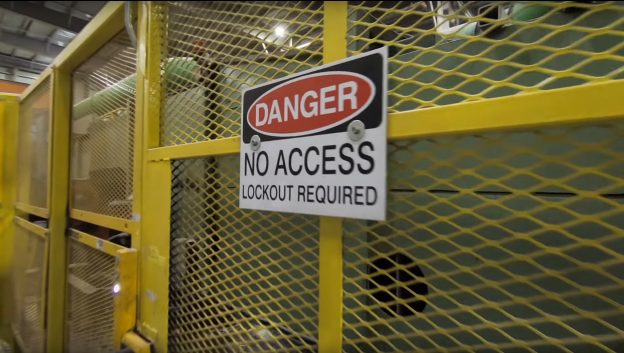
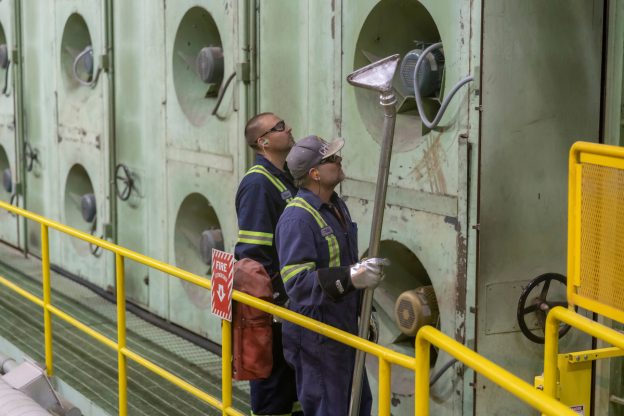
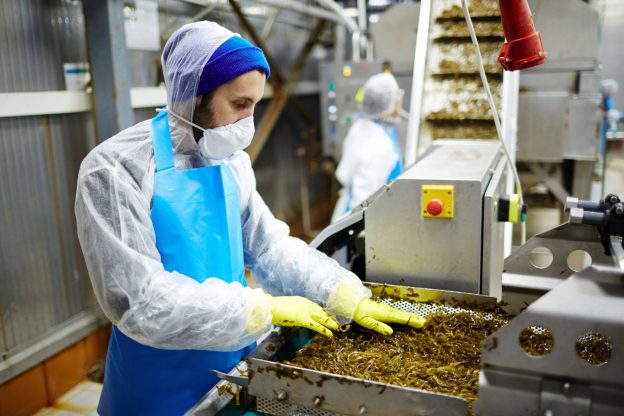
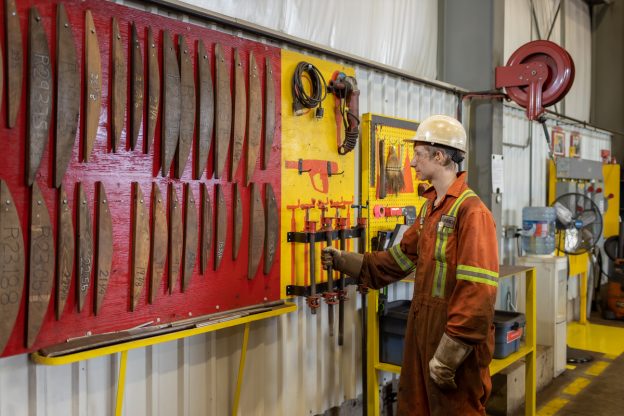
Five winners were honoured September 27 by Canada’s Labour Minister Lisa Raitt in Toronto. In the coming weeks, I’ll follow up with more details about what they did to earn the honour. Congratulations to:

  • Atotech Canada (Ontario)
  • CCI Thermal Technologies (Ontario)
  • GE Aviation (Quebec)
  • Innovative Automation (Ontario)
  • Pratt & Whitney Canada – Halifax Operations (Nova Scotia)

Here’s a link to Mari-Len’s article rounding up the first year of the award.

Lockout lacking, guard removed

October 06, 2011

Image credit: GCPLearning on Flickr

A 41-year-old man in England was seriously injured – but thankfully survived – after he was pulled into the unguarded, rotating parts of a machine.

It gave me shivers to read the story in the Health and Safety Executive blog about Adrian Taylor, a worker in the West Midlands – father of two, same age as my brother.

Adrian had been adjusting the rollers on a machine that makes metal shelving components from steel coil. The machine started accidentally and his high-viz vest and jacket were sucked into the rollers.

“He was pulled forward into the machinery and sustained a number of injuries including a cut to the back of his head, cuts above his right eye and on his back, a swollen cheek bone, bruises on his right arm and a puncture hole in his right elbow,” reads the HSE post.

“HSE’s investigation into the incident found that a fixed guard, which would have protected workers from dangerous parts of the machine, had been removed at least two to three years previously.”

Importance of lock-out

Adrian’s story underscores the importance of lockout – defined in BC’s OHS Regulation as: “the use of a lock or locks to render machinery or equipment inoperable or to isolate an energy source in accordance with a written procedure.”

In other words, lockout stops a machine from starting by accident. WorkSafeBC is producing some new resources on lockout for manufacturers, and they already have lots of lockout resources for many other industries that use big machines – kitchen choppers, meat grinders, drilling rig hammers, dump trucks, punch presses, and lots of other things that shouldn’t turn on while you are adjusting them!

Here are more resources on lockout – and if you have any to add, please share them in the Comments section below.

Lockout a booklet from WorkSafeBC

Lockout from the Industrial Accident Prevention Association

Using lockout and tagout procedures to prevent injury and death during machine maintenance, a tip sheet from NIOSH

Did language barrier lead to worker’s death?, article by Alex Irwin in Manufacturing Weekly

CEOs go undercover on Skeleton Project

June 07, 2011

Moustache may be fake but concern is real

“You need to listen to us and ask.”

That’s the message from a retail store manager talking to her company’s CEO – except she doesn’t know he’s the CEO because he’s visiting the store undercover, wearing a bad wig, fake moustache, and nerdy glasses.

It’s all part of a WorkSafe Victoria campaign in Australia called The Skeleton Project: Baring the bones on workplace safety. The retail CEO toured the store as a “safety researcher” as staff showed him all the risky spots. He’s one of three CEOs – in different industries – who go incognito and take a close-up look at the hazards their workers face. The experience turns out to be quite eye-opening.

WorkSafe Victoria offers a viewing guide for employers who want to show the video to their workers and generate discussion on safety. There’s a also a downloadable questionnaire for workers to fill out after they’ve watched the video. Their feedback can be shared with senior management and lead to solutions – some of which may be quite small, all things considered.

You can view each episode by clicking on a CEO’s image at the Skeleton Project Website. Here’s the trailer for the campaign, on YouTube.

Vivid accident flashbacks “no fun”

April 14, 2011

Photo credit: Beni Ishaque Luthor on Flickr

The image kept replaying in his mind.

My friend Reid accidentally chopped off his pinky finger with a table saw when he was cutting window trim at work.

“For a couple of weeks – particularly when I was going to sleep – I would, in a flash, have a re-run go through my mind of the instant it happened,” he said. “I kept remembering it really vividly, in a particularly visual way. It was no fun.”

Reid describes how the injury happened.

“The wood binded, shot out of the saw, hit my arm, and flew across the room. I felt a hot sensation in my hand that was holding the wood,” he said. “At first I didn’t want to look, but then I looked down and saw that there was just a little, tiny thread of skin keeping the last link of my pinky finger on. Then I started freaking out.”

Reid said he was sweating and yelling the f-word while his coworkers wrapped up his finger and called an ambulance. Luckily his finger was saved and reattached.

He said his flashbacks were a symptom of post-traumatic stress syndrome (PTSD) – described on the HeretoHelp website: “Often after a traumatic event like a car accident or being a victim of crime, people continue to relive the experience through flashbacks…”

Going back to the saw

Eventually he did use a table saw again – despite feeling “very anxious” about it.

Photo credit: Dayland Shannon on Flickr

“I did go back to working with table saws again,” Reid said. “I was very careful and aware and very anxious when working with them.”

I asked what, if anything, he was doing differently at work after the injury.

“The one thing I do differently is take off my gloves,” Reid said. “I was wearing knit, rubberized palm gloves – and that’s a big no-no. It could have otherwise just been a nick but because it was all knit, whatever loop of yarn the tooth caught also sucked my finger in.”

Thanks to Reid for sharing this story. It’s a good reminder of the stress and mental suffering that comes with injury. Not good.

Resources on safe use of table saws

Table Saw Safety, from Thompson River University. (Note: Tip #3: “Do not wear gloves while operating a table saw.”)

OSH Answers: Table Saws, from the Canadian Centre for Occupational Health and Safety

SAFE Work Tips for Working with a Table Saw, from the Workers Compensation Board of Manitoba.

Free Table Saw Safety Training Program, from Kitchen Cabinet Manufacturers Association (KCMA) in partnership with OSHA.

Year-end wrap up for 2010

December 23, 2010

Photo credit: GraphicReality on Flickr

Here’s wishing you a happy, safe, and healthy holiday season. This is Speaking of Safety’s final post for 2010, and I’ll be back in the new year with more stories for you.

It’s been a pleasure to talk with so many dedicated people and share their stories since I started this blog in July. Thanks for reading, posting, retweeting, and otherwise spreading the word on my safety stories.

Please email me if you have stories to share. I would love to hear from you!

Most popular posts of 2010

Here are the Top-5 most-viewed posts on SpeakingOfSafety in 2010:

Read more

Santa’s safety tips

December 14, 2010

Photo credit: Nigel Wedge on Flickr

Read more

Win a free pass to Make It Safe

October 07, 2010

Photo credit: RhonniRhubar on Flickr

They make different things – bread, roofing tiles, metal pipes – but they share a lot in common.

Their processes are often similar, and, no matter what they make, they use many of the same safety solutions.

A group of manufacturing employers, safety professionals, and safety committee members will have a chance to compare notes on October 25 and 26 in Richmond, BC at the Make It Safe conference. Read more

8 steps to a good crew talk

September 21, 2010

Photo credit: Global Crop Diversity Trust on Flickr

Crew talks are an excellent way to deliver information on the job site. I first learned what it takes to deliver a good crew talk from WorkSafeBC’s Bruce Jackson at a Manufacturing Safety Conference (see also the full article I wrote for the May/June 2008 issue of WorkSafe Magazine).

When it’s time to show the crew how to use a new piece of equipment or perform a new process safely, follow these eight steps to communicate your message on the shop floor, outside the site trailer, or at the cash register. Read more

Get your emergency eye wash together

September 07, 2010

Is your emergency eye wash up to par? If not, you’re not alone, says Del Goudreau – an occupational first aid attendant who treats and transfers injured workers to hospital from remote industrial sites.

Del in his mobile treatment and transport truck

Del visits forestry, construction, and manufacturing sites througout southwest B.C. and Vancouver Island. He wrote a Letter to the Editor that appeared in the July/Aug 2009 issue of WorkSafe Magazine – asking employers to make sure workers have access to proper eyewash supplies.

Del’s letter said, “I never see adequate emergency treatment measures or resources to assist injured workers when their eyes have been exposed to chemicals….” That surprised me. I phoned Del for more details.

“You go to some sites and they don’t even have an emergency eyewash, or it’s not in a conspicuous place that’s accessible,” he said. “At best, they’ll have an emergency eyewash bottle which is only one litre of fluid – and most of the time, I don’t know what the fluid is. It’s not very well-marked and it’s not maintained.”

That’s bad news for anyone who gets chemicals or particles in their eyes. Flushing with water ASAP makes a big difference. In some cases, it can save vision.

Workplace rules and regs on eyewash vary among jurisdictions. Here in British Columbia, Canada, the WorkSafeBC Regulation Part 5 Chemical Agents requires employers to select appropriate eye wash facilities: “based on an assessment of the risks in each workplace.”

Gamers bring hand-eye skills to work

July 21, 2010

Photo credit: ChrisBravoTown on Flickr

Electronic gaming gets a bad rap in many circles, but union rep Herb Conat thinks students’ gaming skills are bringing benefits to the workplace.

According to Herb, students who play video games are more skilled at using the joysticks on heavy machinery than students who don’t game.

“It’s just remarkable. Some of these students would blow you away,” says Herb, who – like these young people – was only 16 when he got his first job operating heavy machines. Today, in his early 50s, he’s still playing an active role in the industry as a union rep for members of the International Union of Operating Engineers, Local 115.

“The ergonomics of today’s machines – the hand joysticks and stuff like that – are all things these kids use for gaming. They’re not designing them for old guys. They’re designing them for the young person who’s been playing with joysticks since they were a child…” Herb says.

Herb is one of the organizers of “Heavy Metal Rocks” – a hands-on career program for Grade 11 and 12 students who want to try heavy construction and road building equipment.

These lucky students can actually get behind the wheel of some mighty machines – once they have the right training and safety preparation. They get WHMIS training, Level 1 Occupational First Aid certification, and a site-safety orientation from a WorkSafeBC officer who also gives them their own personal safety equipment.

Scientists study effects of gaming

For years, scientists have looked at how video games affect people – especially kids – who play them. For example, a study published in Current Directions in Psychological Science shows that: “the very act of playing action video games significantly reduces reaction times without sacrificing accuracy.”

What do you think, parents? Does this make you feel better about your kids’ gaming?