
To mask or not to mask

July 28, 2011

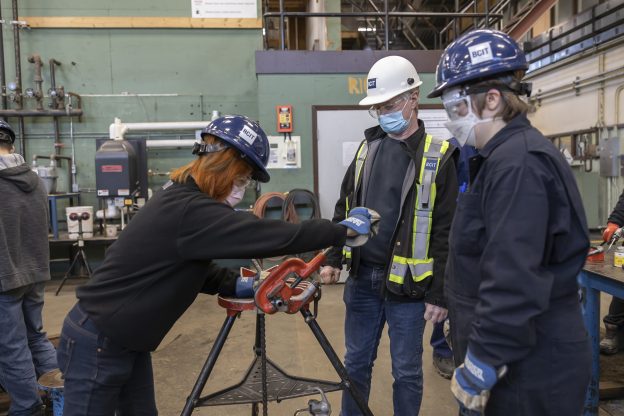
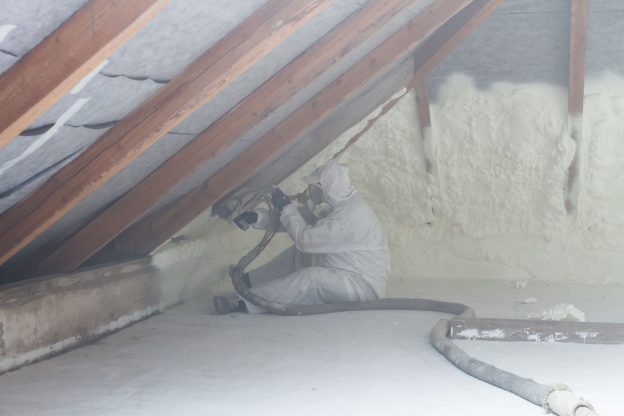
Image from WorkSafeBC Magazine

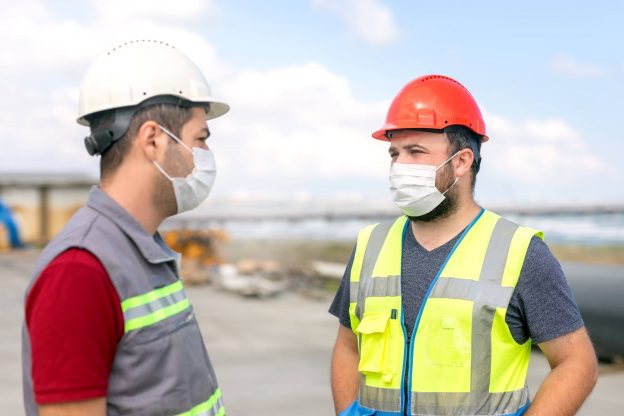
Recently I was at my favourite cafe. It’s small and strangers talk to each other a lot, which is one of the things I love about it (aside from the delicious coffee).

A construction worker came in, all caked in dust after a hard day’s work. He said he had been working beside a young guy using a jackhammer all day. That’s why his skin, hair, and clothing were covered in grey dust.

Considering my interest in workplace safety, I couldn’t help but ask: “What kind of respiratory protection were you using?”

He laughed scornfully and said, “They offered me a mask, but I just said: ‘Look at all this nose hair! I’m old [early 40s?] and I grow a lot of nose hair now, so I might as well use it for something!’” Read more

Asbestos a hidden killer

July 07, 2011

Paul Douglas was exposed to asbestos while working as a boiler maker

Asbestos may be a silent killer, but this man affected by it was anything but silent.

Paul Douglas was diagnosed with mesothelioma and given three to six months to live. But he survived another 11 years and worked hard to raise awareness about his illness and exposure to asbestos. He wrote about his experiences in an online forum for others with his condition.

I read about Paul’s story at HiddenKiller.ca – a new website from WorkSafeBC and its partners. He’s one of the actual people behind the statistics associated with asbestos exposure – along with Dave Ford, an industrial electrician at a pulp mill, Anne Gerard, who was exposed to asbestos in tape she used at a denture clinic, and many others.

Anne Gerard

This website informs people re: what is asbestos, where is it found, what’s the danger, how should it be handled, and more. It even includes a knowledge-testing quiz. Mesothelioma, caused by asbestos exposure (that may have been decades ago), is BC’s number one occupational disease and leading cause of worker disease and death, according to WorkSafeBC.

Renovations seem to be happening all over the place, and since asbestos was used so much in building materials from the 50s to the 90s, everyone needs to pay attention. All workers have the right to know the situation in the buildings they work on and have access to suitable PPE. Workers and employers can learn more at the HiddenKiller website – and by checking out this WorkSafeBC video.

New construction safety signs in BC

July 05, 2011

Construction safety sign in Vancouver

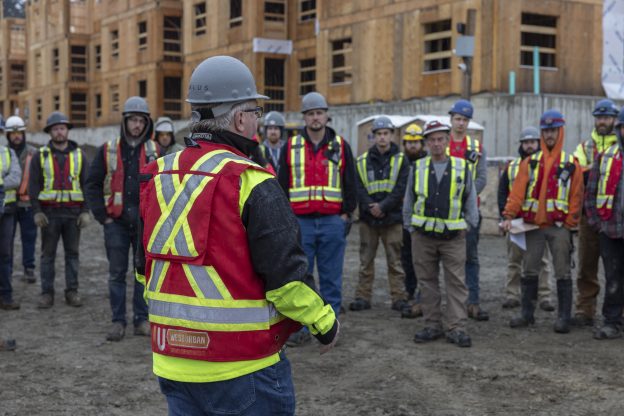
I stopped by the new BCIT campus under construction to check out the new safety signs unveiled on June 9 by WorkSafeBC and The Community Against Preventable Injuries (a.k.a. Preventable).

The new safety posters emblazon the sides of buildings, fencing, guardrails, and magnets on equipment – part of a joint WorkSafeBC–Preventable Construction Signage Pilot Project. The messages, with their bold white on black, aren’t just for people working on construction sites, but for everyone who sees them as they pass. They’re a reminder that we all need to stay safe, no matter what we do at work.

I walked around the perimeter of the site to get a good look at the signs and ended up chatting with some workers on the way back from their coffee break. I asked them to be in my photos, but they said no and joked around about how they would pose!

New construction safety signs in Vancouver at Stuart Olson Dominion's Broadway Tech

Focus on construction

They are focusing on this industry because it is so high-risk.

According to WorkSafeBC, there were 14,405 claims from construction worksites across BC in 2010. Of these, 7,620 were health-care-only claims, 6,014 were short-term disability claims, and 739 were long-term disability claims.

There were 32 fatal claims, and of those, 19 were due to occupational diseases.

Stuart Olson Dominion’s Broadway Tech Centre #4 is one of eight sites participating. Five are in the Lower Mainland, and the others are in Esquimalt, Kamloops, and Prince George. The other employers are ITC Construction Group, Kindred Construction Ltd., Lafarge Aggregate & Concrete, and PCL Construction.

Thanks to all for spreading the word in such a visible way. For more information on construction safety, please visit the BC Construction Safety Association.

Just pretend you’re sweeping

June 21, 2011

Photo credit: spengy on Flickr

Once there was a boss who had a plan for fooling safety inspectors. One of his former employees told me about it.

This employee, who I’ll call Dan, said the boss asked him to build scaffolding three storeys high. On top of that, he was working in a region where regulations required certification for anyone who builds scaffolding more than one storey high.

“The boss gave me a little whisk broom and told me that if any strange cars drove onto the site while I was building (i.e., some sort of inspector), I should take out the whisk broom and pretend like I was just cleaning up,” Dan told me. “It seemed like a pretty good idea at the time.”

I was appalled. I asked Dan if he felt uncomfortable with the task.

“I guess I just assumed that the boss wouldn’t put me in a dangerous situation. In truth, I had no experience with scaffolding and had no idea what i was doing,” Dan wrote. “Ignorance is bliss, right?”

Scaffolding resources

Training is very important, especially for young workers with less experience – people like Dan, who in this case had no experience with scaffolding.

Many resources are available for educating Dan and (more importantly) his unscrupulous employer. Here are some:

Scaffolding

Image from WorkSafeBC's How to Erect Access Frame Scaffolding

10 scaffold safety essentials from Canadian Occupational Safety Magazine

How to Erect Access Frame Scaffolding, a poster from WorkSafeBC

Toolbox Meeting Guide: Scaffold requirements from WorkSafeBC

Frame Scaffold Set Up from the Canadian Centre for Occupational Health and Safety

Construction E-Tool: Scaffolding from OSHA

Never stand under a crane load

June 02, 2011

Photo credit: kristykay22 on Flickr

My friend Darcy Olson told me about a crane that dropped its big, heavy hook on a construction site in downtown Vancouver.

He was working as an industrial electrician, reviewing blueprints with his foreman on the first floor of a three-story building, when he took note of two cranes servicing the site.

“We are instructed to always avoid being under a crane load, and at least be very aware if one is flying up above us,” Darcy wrote, via Facebook.

“As we were discussing our itinerary, I noted that a rigger and a helper were flying up material to the incomplete third floor. It was a casual observance, but I was keeping my eye in their direction.

Photo credit: Rob Main on Flickr

“The crane had dropped its cargo to the awaiting rigger and was in place to lower down to receive another. As I glanced up, I saw the ground-based rigger and his helper running like the devil himself was after them. One of the cables had snapped, sending the carriage hook plummeting three floors. The impact shook the ground and sent up such a plume of dust that I thought the load had dropped. That hook weighed two or three hundred pounds.

“The cable itself whipped through the air with such force it would have cut a person in half. All construction came to a halt. Luckily no one was injured, or killed. The resulting investigation revealed that the crane in question was due to be taken out of service due to its age. It was removed from the site and the other hammerhead crane serviced the rest of the project.”

Crane operator certification in BC

Crane operators in BC have been getting certified since 2007 because their work can have such serious effects when something goes wrong with the equipment, as Darcy describes. More info on this at the BC Association for Crane Safety website.

In BC, the Occupational Health and Safety (OHS) Regulations includes these two sections specific to crane operations:

Part 14 – Cranes and Hoists
Part 15 – Rigging

Thanks again to Darcy for this second story about working in construction. The first was Unsafe Handling of Nail Guns – and there are more to come.

Do you have a story to share? Email me: susan@speakingofsafety.ca

Unsafe handling of nail-guns

April 28, 2011

Image: "Townhouse" by pearlblossom/Melissa Samworth on Flickr

A worker on a steep roof slipped and shot himself in the leg with a nail-gun. My friend Darcy Olsen told me about this incident, answering my ongoing request for stories about workplace danger.

It was a hot, humid day in Ottawa in 2005. Darcy and his crew of eight were putting shingles on a multi-phase townhouse re-roof project. Certified in Level 3 Occupational First Aid, Darcy was a skilled tradesman in charge of site safety and emergencies.

“I had gone over the safety issues of using toe-boards on the steep sections with everyone,” Darcy wrote, via Facebook message. “I was on a northern section of roof after setting everyone to their tasks. We had an exuberant young apprentice shingler working another section.”

Toe-boards are part of a roofer’s fall protection system. They are long boards – usually 2×6 or 2×8 – installed along the roof edge.

What happened?

“My lead hand came over and called me to the scene. Young Ben had decided that he didn’t need any toe-boards on his steep section and was working with only his fall-harness,” Darcy wrote. “But, due to the heat, which makes shingles very soft, he slipped in his harness.

“He was using an air-powered roofing coil nailer with 1.25-inch coil nails in it. He had been keeping his finger on the trigger as he moved about – a habit I had previously reprimanded him for. A softened shingle had torn loose under his body weight and, as he slipped, he shot himself just above the left knee with his air nailer – lodging it firmly into the bone.

Image of a nail stuck in a person's leg bone, from WorkSafeBC video: Safe Handling of Nail Guns

“By the time I got to where he was, he was in a semblance of shock, but members of the crew had managed to get him to the 4/12 section of roof. I immediately called 911 for a steep-roof rescue and the fire department came to aid. I stayed with him until the fire department showed up with a telescoping basket to remove him.

“He spent three days in the hospital, and the the time loss for him was only a few weeks. It could’ve been a lot worse if he had shot himself a few inches lower in the kneecap.

“It was a serious safety lesson for the entire crew,” Darcy wrote.

WorkSafeBC’s nail-gun safety series

Darcy’s story made me think of these (fairly gory!) videos on nail-guns and other potentially dangerous power tools: You’re a Pro: Power Tool Series

Attitudes to danger in construction

April 05, 2011

Photo credit: Greg Younger on Flickr

A construction employer once told me about an attitude he sees on worksites.

“People really don’t pay attention to how dangerous the industry is,” he said. “I see it all the time. It’s a leftover cultural thing where, to some degree, there’s almost a pride in avoiding some of the basic safety standards that are out there. For example, not wearing fall protection when you’re up on a roof, or not wearing eye protection and being careless around power tools.”

I emailed my good friend John Crombie to see if he agreed. John worked as a construction labourer for many years before taking the Construction Safety Officer program at BCIT and eventually moving into the building maintenance/tenant management business. He said he’d seen and done many of the same things himself in the past.

“I don’t think it is macho, or a matter of pride, exactly. I always wanted to hurry up and cut corners,” John said. “It really took me a while, and the threat of serious punishment, to realize that I was working unsafely and there was no reason, outside my own head and heart, for doing so. At some point I realized that I was the one who put the rules aside. Part of it is speed and convenience… For too long, following safety requirements seemed like an added burden. We had to put up with low pay, hard work, bad weather, overtime, and now – MORE safety rules!”

But John said his perspective changed over time, especially once he was a CSO.

“At some point, especially when I became responsible for the safety supervision of other workers, and responsible for how well they followed the rules, I realized that adherence to safety was all part of doing our best,” John said. “Doing our best became: safely, completely, and on time. Getting paid more also helped, as in working safely is also working more skillfully, and if this is rewarded with better pay – reflecting a higher level of training and output – then it all works better.”

Thanks to John for sharing his story and always being there for my questions. For more information on residential construction safety, check out the cover story by Helena Bryan in the March/April 2011 issue of WorkSafe Magazine.

More info is also available from the BC Construction Safety Alliance – a non-profit association that develops health and safety programs, tools and resources for more than 35,000 construction employers and 180,000 workers in our province.

Ventana Safety Day

March 29, 2011

Ventana staff get hands-on - reviewing proper use of fire extinguishers. Photo credit: Ventana Construction

Recently I was invited to Ventana Construction‘s Safety Day 2011 – a mini-conference that brought together more than 30 workers for courses, certification, and a lot of laughs.

“We have many construction sites and our employees are spread out and rarely get a chance to see each other in a large group,” said Stephen Bertoia, Ventana’s project manager/safety coordinator. “I wanted to get everyone from the sites together for one event.”

Stephen said he got the idea of holding the event after attending the Bridging the Gap safety conference for the construction industry in November. He said he liked the courses offered at the construction safety conference, so he talked to safety vendors about setting up at a conference at Ventana’s headquarters in Burnaby. Read more

Simon’s Legs: Life after workplace injury

January 13, 2011

Simon Paradis is adapting to a new lifestyle. He’s recovering from a severe workplace injury that’s left him unable to walk.

Without use of his legs, Simon has a new process for getting out and about. It takes a lot of effort and he shares it in his photo essay/song: “Simon’s Legs” with his singing and guitar on “You can’t stand up alone” – a blues-gospel song by Mindy Jostyn. Simon’s wife, Kara Stanley, was his partner in this very touching project. I’d like to talk more with Simon about this, so I’ll follow up in a future post. Below is what he told WorkSafeBC.

Healing through art

“I wanted to bring the viewer into my environment,” said Paradis, quoted in this WorkSafeBC news release. “It was a great outlet — I was focused and enthusiastic about this project because it’s a creative representation of what I’m going through.”

Thanks to Simon and Kara for sharing this photo montage, which you can see on YouTube. It’s inspiring to see how much people can adapt to change and persevere through challenging times. What a great example of the healing power of art!

Cord organizer wins safety award

December 16, 2010

Preston Boomars of Ventana Construction wins CSSE Safety Innovation in Construction Award

I admire people who can see a problem, find a solution, and put it into practice. Preston Boomars of Ventana Construction saw problems with electrical cords on construction sites, so he created a new system for keeping them organized.

What did he make?

It’s a portable stand that houses an electrical panel and keeps cords organized using holes drilled into its sides. It charges batteries for portable tools, and has places for a light, fire-extinguisher, air horn, and emergency eye-wash station.

This new “Electrical Cord Management System” won a Safety Innovation in Construction Award from the Canadian Society of Safety Engineers at the 2010 Safety Forum ceremony.

Electrical cords are plugged in through holes in the sides of the ECM system. By keeping cords organized and out of the way, the system protects cords from damage and avoids the frustration of tripping GFCIs [ground fault circuit interrupters]. Trades workers tag their cords to keep track of which ones are theirs. Read more