
Archive for June, 2012

Preventing injuries among older workers

June 28, 2012

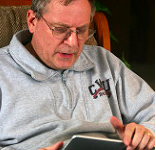
Baby Boomer with iPad. Photo: Quinn Dombrowski on Flickr

While young workers are known for their higher injury rate, older workers’ injuries tend to be more serious.

UBC’s Partnership for Work, Health, and Safety reports that women between 55 and 64 are three times more likely to experience a severe fall than women 15 to 24 years old – and women working in health care are three to four times more likely to incur a serious injury as men in that industry.

They released these findings in a new report based on their analysis of WorkSafeBC data on serious injuries from 2002 and 2008.

“Serious injuries result in more severe medical diagnoses, longer periods of disability, and higher compensation claim costs, and thus are key targets for injury prevention initiatives,” reads the report.

Prevention initiatives for older workers are especially important because this group of workers is growing in proportion to other age groups. The UBC report notes that the 55 to 64-year-old segment of the Canadian workforce grew faster than any other age group between 2001 and 2006.

Older workers’ safety issues

Older workers take longer to heal and recover compared to their younger counterparts. They’re more prone to sprains and strains – and the exact same injury can hit an older person much harder.

“When the 18-year-old working at a fast-food restaurant, for example, slips on a greasy French fry, he’s likely to get right back up; his 60-year-old colleague might well suffer a broken hip,” said WorkSafeBC ergonomist Peter Goyert in this WorkSafe Magazine article from Jan/Feb 2011.

“On average, if you’re injured on the job and need time off, you’ll miss your age in days. A 20-year-old will miss 20 work days; a 60-year-old, 60 days, and so on.”

Solutions for this group of workers include ergonomic tools and set-ups, shift rotation, part-time employment, and pre-shift stretching – many of which are explored in the links below. It will be interesting to see what springs from the new study – and in the meantime, here’s more info.

Tapping into a Unique Labour Force from go2

Use Ergonomics to Keep Older Workers Healthy & Safe – from OHS Insider

Safe and Healthy: A Guide to Managing an Aging Workforce from the Government of Alberta

Aging Workers from the Canadian Centre for Occupational Health and Safety

Aging Workforce News

The Sloan Centre for Aging and Work from Boston College

The Pain Game: funny new video tackles serious topic

June 26, 2012

WorkSafe Victoria just launched the first two TV spots in a new campaign to reduce slips, trips, and falls at work – showing the consequence of taking shortcuts. The Pain Game ads are a spoof of the classic game show format, and its creators’ morbid sense of humour made me laugh and cringe at the same time. Definitely worth a watch!

New tools for preventing silviculture injuries

June 21, 2012

From WorkSafeBC's new info sheet for treeplanters

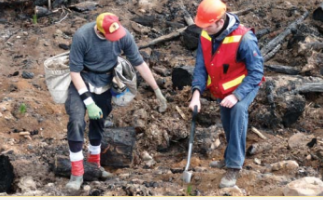
Musculoskeletal injuries (MSIs), such as sprains and strains, are the most common injuries to treeplanters. According to WorkSafeBC, planters’ repetitive-strain claims alone cost more than $870,000 and 8,621 lost days of work between 2003 and 2007.

A new series of info sheets for silviculture workers is available online from WorkSafeBC – developed in partnership with the Western Silviculture Contractor’s Association, BC Forest Safety Council, FPInnovations, Brinkman & Associates Reforestation, Western Forest Products, and the Ministry of Forests, Lands and Natural Resource Operations.

“If you suffer an MSI and cannot do your normal amount of work, you won’t be able to earn any money doing piecework,” reads the info sheet for workers.

This piecework arrangement is described in a recent story in the Merritt Herald; workers earned 13 cents per tree, with some aiming to plant “several thousand per day.” Without the right precautions, this can take its toll on the body.

I wrote about a treeplanter who got injured at work in my post Treeplanting lessons learned from experience. He suffered an MSI one year, and – after four months of healing – vowed to be ready for the next season. He strengthened his core muscles, with reminders via email from his company’s first aid attendant.

Pre-season training

Pre-season training is one of the recommendations in the new info series – with a link to the Fit to Plant Training Log – a program created by Dr. Delia Roberts, who studied the physical demands of treeplanting and shared what she learned about preventing injuries. Her many publications for treeplanters are used widely by reforestation companies in BC – available from the Treeplanting portal of the Selkirk College website.

Info session on managing heat stress

June 19, 2012

Photo credit: furbychan on Flickr

Summer really is coming – despite all the rain we’ve had in BC – and with it comes the risk of heat-related illness.

3M is offering a free info session for employers on monitoring heat stress. I found out about it from a contact at the Canadian Society of Safety Engineers and thought you might like to know about it.

Heat Stress Monitoring a “Best Practices Approach” is Thurs, June 28 from 9 to 11 a.m. at the Executive Inn Burnaby, including info on “the potential risks of heat stress, how to detect key environmental factors that can contribute to heat stress, and how to establish a heat stress management program.”

To find out more, I got in touch with Frank Walsh, from 3M’s Occupational Health and Environmental Safety Division. He’s the marketing operations manager for Hearing, Head, and Face Protection – and I asked him three questions.

1) What will people get out of the session?

“In many places across Canada our environment seems to be getting warmer and more humid,” Frank said, via email. “Through this seminar health and safety professionals will develop an understanding of heat stress and its symptoms. This understanding will be helpful in identifying the risks of high temperatures, in learning how to measure heat stress, and in developing a program to mitigate the risks.”

2) Why should employers and safety pros attend?

“Many organizations might have workers that are exposed to high temperatures either due to the weather or due to the job that they have to perform. These employers have a legal duty to protect their workers from hazardous heat. The best first step is a thorough understanding of the issue,” Frank said.

3) Why does 3M believe in sharing this knowledge?

“3M’s Occupational Health and Environmental Safety Division works to help organizations protect their workers much as our own company does for our workers in our many manufacturing sites across Canada and around the world,” Frank said.

“Our motto is to be ‘The Power to Protect Your World’ and a significant part of that is through education and training. Whether it’s a seminar such as this one or a quick demonstration on something like how to wear earplugs properly, it’s all about keeping workers safe.”

Please RSVP to Allan at 1-800-265-1840 x.2958 or email: asgordon2@mmm.com if you want to go.

More info on heat-related illness

Heat-related illness from HealthLinkBC

Heat Stress web portal from NIOSH

Tips for exercising safely in the heat from the National Athletic Trainers Association

Heat Related Illnesses from the American Academy of Pediatrics

Heat safety awareness from Blog4Safety.com sponsored by TASCO

Preventing heat stress at work (English) is available from WorkSafeBC, with versions available in Chinese, Punjabi, Spanish, Vietnamese

Safety guide for hotel room attendants

June 14, 2012

Photo by Speaking of Safety

A new resource from go2 – Safety Sweep: An Employer’s Guide to Preventing Injuries to Room Attendants in BC Accommodations – is now available online.

It includes forms, checklists, and other documents you can customize for your own workplace – with best practices for recruitment and selection, orientation and training, and ongoing supervision.

I heard about it from Trina Wright, the program manager for industry health and safety at go2 – the human resource association for BC’s tourism and hospitality industry. We talked about this topic last fall when I was writing my post Safety for hotel room attendants.

As I mentioned in my earlier post, Trina facilitates an industry health & safety technical advisory committee of general managers, HR and safety professionals from BC hotel properties. They’re working together to identify key accidents for the hotel sector and develop strategies for prevention – one of which is this new manual. go2 also coordinates the Tourism Labour Market Strategy

Room attendants are a key focus because their injuries account for more than 40 percent of WorkSafeBC claim costs within the BC accommodation sector. Strains, sprains, slips, and falls are some of the most common causes of injury.

Thanks to Trina for letting me know about this new, free manual available to all accommodation operators – and if you have any helpful resources to share, please email me at susan@speakingofsafety.ca.

More info

Hotel Housekeeping from the Canadian Centre for Occupational Health and Safety from the Canadian Centre for Occupational Health and Safeth

Ergonomic Tips for the Hospitality Industry from WorkSafeBC

Safety Fool: a heads-up rap video

June 12, 2012

“Straight outta Edmonton” – from the folks at HeadsUpAb.com – this new video reminds young workers (and the rest of us) how to foster a safe workplace and “avoid acting the fool.” Matt and Chris – the Canadian safety rap duo – put a new spin on an old message for young people starting new jobs this summer. Check it out and share it with the kids in your life.

Forklift trainer suggests OHS Regulation App

June 07, 2012

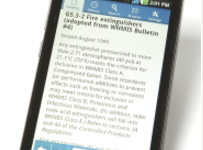
“The biggest part of safety in my opinion, is being armed with the proper information, thus giving you the ability to make proper choices,” says Joel Cajapin, a forklift trainer in BC who tweeted a link to a “very useful WorkSafe BC app for iPhones and Androids. http://bit.ly/IScKhX

He’s talking about the latest version the Occupational Health and Safety Regulation app. The first version, for iPhone, was downloaded 6,729 times, so a second version was released in March to include Android users.

“Both versions allow users to search and browse the Regulation, policies, and WorkSafeBC standards, and share content by email with colleagues. The app loads onto the device so it can be used even when no cell or wireless service is available — such as a remote worksite or basement of a building,” reads this WSBC update on the app.

I asked Joel (who is @fit_trainer on Twitter) how/when he uses the OHSR app.

“As a Forklift Safety Trainer, I use it to make sure I am delivering current Regulations during my courses,” he said via Twitter direct message. “Also, a very good source for reference when course participants have questions and/or need clarification on regulations requirements.”

Sharing through Twitter

This is a great example of social media used well – when something helps you, so you pass it on to others who might benefit as well. I asked Joel what inspired him to tweet a link to it.

“I just wanted to spread the word. I’ve come across several people that were unaware of the minimal requirements of the regs,” Joel wrote. “Bottom line, I am more concerned about people going home to their families in the same condition they showed up for work on any given day.”

Thanks to Joel for sharing. What’s the best safety resource you’ve found through social media lately?