

Archive for March, 2012

Safety partners talk steep-slope roofing

March 29, 2012

Falling. It’s still one of the biggest risks for people who work on steep slope roofs. This WorkSafeBC report says 117 workers fell from roofs in 2008 to 2010 and on average each of these claims cost $44,518 and resulted in 166 days of lost time.

That’s why the Roofing Contractors Association of BC and its partners – WorkSafeBC, the BC Construction Safety Alliance, Hazmasters, and Ono Work and Safety – hosted a unique, one-day symposium on March 29 for people in the steep-slope roofing industry.

To find out more, I got in touch with HazMasters sales manager Derek Malone, who I met at the Bridging the Gap conference last fall.

“Unique to this symposium is the practical training area at RCABC. While many shows and symposiums are held in hotels this one actually has mock roof tops and a large outdoor area,” Derek said, describing the fall protection systems Hazmasters installed and set up.

“These are temporarily installed on mock roofs that are slightly elevated, allowing for the delegates to touch and see the equipment – like the three-person fall protection system that attaches to the peak of a roof. It installs in minutes and provides anchorage for three workers,” he said.

Find the flaw

Derek said each delegate will perform a hands-on inspection of a harness – some with catastrophic flaws, some with minor flaws, and some ready to use.

“Capital Safety is performing drop tests for the group to show how much force a typical fall can produce,” he said. “Then, to show how much of this force can be absorbed by our modern fall protection systems, like the NANO. Delegates will see how a reduction of 1000 pounds is now achievable with today’s systems.”

I also talked with Roger Sové, the BCRSA’s safety coordinator, who told me more about what delegates would get for their $25 registration fee.

“They will get a better understanding of what their responsibilities are and how they can make safety part of what they do,” he said. “It will enhance their understanding as to why they should work in a safe manner when they hear from other roofers about the consequences of not using proper fall protection systems when they are required. They will have an opportunity to discuss actual fall protection planning and strategy with safety professionals, which will help them to make better decisions on how to work within the regulations and in turn create a safer workplace.”

Thanks to Derek and Roger for telling me more – and congrats on selling out the event.

More fall protection resources

Fall Protection (6-Part Video)
http://www2.worksafebc.com/Publications/Multimedia/Videos.asp?ReportID=34541 from WorkSafeBC

An Introduction to Personal Fall Protection from WorkSafeBC

Fall Protection – Top plate best practice from the BC Construction Safety Alliance

Fall protection pocket card from HazMasters

Accident Alert – Falls from Heights in Construction from WorkSafeBC

High Time – a WorkSafe Magazine story on steep slope roofing from Jul/Aug 2011

Building safety community online

March 22, 2012

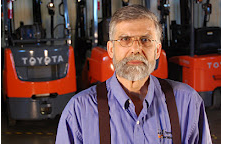
Kyle Thill of Toyota-Lift Minnesota

Recently on Twitter (where I am @SpeakinOfSafety) I noticed this link: How About An Easy Free Safety Tip, posted by Kyle Thill of Toyota-Lift Minnesota. It leads to his blog post reminding forklift drivers that a simple honk is one way to keep pedestrians safer.

As I read the post, I thought about how much Kyle does to build online community. On Twitter (where he is @ToyotaEquipment) Kyle tweets every post I publish here on Speaking of Safety. Every day, he spreads the safety message and connects people by re-tweeting other people’s comments and links on Twitter.

Every Tuesday, Kyle takes part in a Twitter tradition known as “Facebook Liking Tuesday” – shortened to #FBLT on Twitter. In case you don’t know, the # symbol is known as a “hashtag” which is used to mark a theme or topic. He told several people about the Speaking of Safety Facebook page – many of whom showed their support for this blog by clicking the Like button.

Another popular hashtag is #FF, which stands for Follow Friday. Kyle does a lot of #FF posts on Twitter – which, in other words, means he suggests different people to follow on Twitter. Many times he’s suggested me.

Why does he do it?

I asked Kyle, via Twitter direct message (between him and I), what motivates him to introduce so many safety people to one another on social media. I asked why he does it.

“Primary is representing our people, our company and our original equipment manufacturers in a positive light,” Kyle said. “We were at a loss to explain why our OEs weren’t using social media. They would praise social media, but their actions didn’t support that praise.”

Many companies and organizations are setting up new social media accounts – and Kyle’s efforts will help them to engage with one another. I invite you to enter your social media coordinates in the Comments. I’ll follow your safety tweets on Twitter and Like your Facebook page – and if you have any questions about getting started, feel free to ask me in the Comments or by email.

A sample of seven safety folks to follow on Twitter

@threadsoflifeca
@NIOSHconstruct
@OccHealthSafety
@OHSCanada
@CCOHS
@Preventable
@SafetyDrivenBC

Airbag backpack saves skier and makes news

March 20, 2012

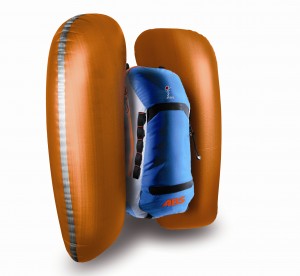
Photo credit: ABS Avalanche Airbag

A new safety tool – this ABS Avalanche Airbag Backpack – fulfilled its ultimate job of saving a life.

Three skiers died in a backcountry avalanche in Washington State, but a fourth – Elyse Saugstad – survived. She credited the airbag for saving her, in this statement to media on her website.

How does it work?

I found a good explanation from Doug Abromeit, former director of the Forest Services National Avalanche Center. He spoke about the airbag for this National Public Radio story Science Behind Avalanche ‘Air Bag’ Saves Skier.

“If a person gets caught in an avalanche, it’s got a ripcord like a skydiver has a ripcord for his parachute and they pull that and then it inflates an airbag that goes around the person’s head, which protects their head and their neck, and then it provides floatation so the person stays on top of the avalanche debris,” reads the NPR radio transcript of Doug’s interview.

“They can just ride down on the avalanche and, nine times out of 10, they’re on the surface of the avalanche debris when it comes to rest.”

Talking on Twitter and Facebook

People shared links to info on this safety success on Twitter. For example, @TahoeMtnSports gave it a shout-out on Twitter and wrote a blog post about it – inlcuding these stats from the manufacturer: of 267 persons who activated an ABS avalanche airbag, 97 percent survived, and 84 percent were uninjured.

Another person tweeted: “Sad to hear about all the avalanche deaths in WA over the weekend. Making me think harder and harder about buying an ABS pack.”

On Facebook, people were also talking about this new technology – saying they hadn’t known it existed.

“I really doubt I’m the only one who didn’t know this system was available these days. After reading about the horrible event… I personally wanted to find out more about the backpack system. Found the website, read every piece of text about the system and now here on FB looking for customer comments etc.” said one person who posted on the ABS Facebook page.

Another wrote: “Making money by saving lives is cool! I was up in the Cascades this weekend but didn’t go out of bounds. Next time I do though, I am happy to know about the ABS option. Elyse not only saved her life with ABS, she may very well save others due to this tragic story spreading the word about ABS. I had never about such an option before!”

Personally, it terrifies me to think about “going out of bounds” on a ski hill, and I really hope this technology doesn’t encourage more people who wouldn’t otherwise try it. They could still fall off a cliff or get lost!

Here’s a video – posted on Twitter by @WorkSafeBC – showing the airbag backpack in action.

New way to put out farm fires

March 15, 2012

Photo credit: John Oxton on Flickr

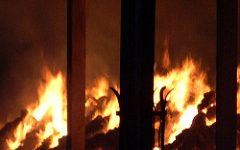
Canadian farmers have a new line of defence against fires, just in time for Canadian Agriculture Safety Week March 11 to 17. Cold Fire Canada, who I wrote about last year, just released a portable fire extinguisher that can be suspended from any ceiling. In case of fire, the unit releases a unique, biodegradable agent that “takes the heat out of fire,” as you will see in the video below (published on YouTube in 2008 during its R&D phase).

I asked Grant Pearson, president of Cold Fire Canada, to tell me more.

“The unit in the video is unique as it is totally self contained,” Grant said, via LinkedIn message. “No electricity, no water hook-up – just hang it in your barn or wheat silo or remote storage, and it will extinguish when the built-in heat sensor reaches 135 degrees F. It contains 12 liters of Cold Fire and will cover 138 sq ft. As you can see it is extremely effective at putting out the fire, is 100% environmentally safe (for live stock etc..) and leaves no mess.”

Safe farming: “I Have a Role”

March 13, 2012

It’s Canadian Agriculture Safety Week, March 11 to 17, and activities are taking place across the country.

Here in BC, the launch was held at a Kelowna winery, where reps from the Farm and Ranch Safety and Health Association (FARSHA) and the Canadian Agricultural Safety Association (CASA) planned to “give updates on innovative farm safety initiatives in BC,” reads the FARSHA website.

I’ll update you on BC activities as I learn more, and in the meantime, I’ll tell you what’s happening in the province next door. I contacted Kenda Lubeck – farm safety coordinator for Alberta Agriculture and Rural Development – to find out more about Alberta’s main message: “Everyone on a farm is responsible for safety.” The Alberta Farm Safety Program‘s I Have A Role” campaign is set for launch during March 11 to 17.

“Our hope is that this campaign will create more discussion around safety at all levels on Alberta farms,” Kenda said. “By calling out roles and responsibilities it brings the focus to the importance of human life rather than getting the job done regardless of the cost.”

Too many preventable deaths

Eighteen people die in farm-related incidents each year in Alberta. That’s why the new campaign emphasizes the important role of everyone in the agricultural industy – including parents, farm owners, workers, equipment dealers, and community groups.

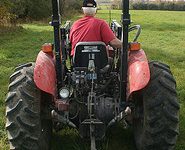
Photo credit: Bill Barber on Flickr

“By creating conversation around safety, it may just remind someone to take the time to install ROPS (roll over protective structures) on their tractors or to take that final walk around their equipment before heading out on the job,” Kenda said. “Farm injuries and fatalities are preventable.”

Plan – Farm – Safety

“Plan • Farm • Safety” is the theme of the three-year Canadian Agricultural Safety campaign which began in 2010.

“The 2010 campaign promoted “Plan”, with safety walkabouts and an emphasis on planning for safety. In 2011, the focus was on “Farm”, with highlights on implementation, documentation and training,” reads the CASA website.

This year’s campaign on “Safety” focuses on the assessment, improvement and further development of safety systems.

Thanks to Kenda for sharing her story – and let me know if you’re taking part in any activities so I can praise your efforts and tell everyone! ;-)

New farm safety video from WorkSafeBC

New website drives worker safety on road

March 08, 2012

RoadSafetyAtWork.ca is a new online toolkit for employers with workers who drive on the job. It uses a five-step approach to safer workplace driving, including tools, tips, guidance, examples, and best practices – launched by WorkSafeBC in partnership with the BCAA Road Safety Foundation.

To find out more, I contacted one of the project collaborators: Brian Best, director of Warehousing & Distribution for London Drugs. He’s been managing on-road employees at London Drugs for the past 22 years and managed driver operations and fleet maintenance at Federal Express and Purolator in the Toronto area for eight years.

Brian Best, Director of Warehousing & Distribution for London Drugs Ltd.

“What I especially like about the website is how you can follow the five key steps to assess your current competencies and then channel your efforts for improved fleet safety progressively, over a period of time,” said Brian, who in 2010 joined the Technical Advisory Committee of the Occupational Road Safety Project.

“You can start with an online ’2-minute safety audit’ and then a ‘Risk Assessment’ to understand how your company currently manages safe practices and culture for workers on the road,” he said. “In performing these self-assessments you can identify areas where your existing practices may be lacking compared to international benchmarks for best worker road safety.”

Brian said the new website is “an agreed-on set of preferred practices that we feel will work for all BC employers” – stemming from what the TAC learned from talking with BC industry and evaluating what’s been adopted in other jurisdictions.

“Because such a variety of organizations participated in the development of the new website, it is targeted to support a wide range of organizations and types of users: large and small, public and private, new to road safety OR with a well-established road safety program.”

Thanks to Brian for sharing his story – and congratulations to the collaborators. Check it out – and let me know what you think.

Vote for student safety videos

March 01, 2012

From WorkSafeBC.com website

The first four entries are posted and I’ve got to say I’m pretty impressed with the creative ways they answer the question: “What motivates you, your friends, or your family to come home safely from work?”

It’s WorkSafeBC’s seventh annual video contest for BC youth in Grades 8 to 12 and from now until April 13, more will be added so you can vote for your favourites.

My 11-yr-old son and I watched the first ones, and both agreed our favourite (so far) is “Because of my cat.” In it, one actor wears costumes of workers in different industries – each of whom had his own quirky reasons for getting home safely. This video makes great use of humour to deliver a serious message and answers the question in its very title.

Using the videos after the contest

Teachers, parents, and employers can use the winning videos long after the contest closes and prizes are awarded. These creative pieces keep on giving: useful in schools, training, and new worker orientation. Entries for past years are available, so have a look.

This delivery – for youth by youth – is seen by many as an effective way to get young people thinking about workplace safety and other important issues. I really enjoyed all the videos, as always, and look forward to more.

Please spread the word if you know any BC students in Grades 8 to 12. Entry deadline: April 13, 2012 at 5 p.m.