Archive for November, 2011

Looking back on hearing protection

November 29, 2011

Vancouver musician Denise Dodd plays at CJSF Radio

Denise Dodd is a Vancouver musician who told me about a very noisy job she had long ago. It wasn’t playing music that gave her a headache every night – it was selling flowers on a bar circuit in Edmonton back in the 90s.


Her shift started at 8 p.m. at the rock bar headquarters, where she met the driver who took her to a country bar, a couple of lounges, then back to the rock bar.

“The lounges were okay for noise, but in the bars and clubs, it was all shouting. You also had to stand very close to people, while they yelled in your ear,” she said. “The customers were pretty drunk usually, so it made it hard to keep your distance from them. You had to ‘chat people up’ – usually men – to get them to buy a rose for a lady, and they would usually hit on me as well!”

Her shift went til 3 a.m. and she said the headache usually hit halfway through the night.

“By the end of the night, my throat was sore from yelling, and my ears were ringing when I got home and it was quiet. That’s when I would notice it,” she said. “It was like after a concert, only this was four or five times a week.”

But that was many years ago. Since then, Denise has been to audio recording school, where she learned about hearing protection.

“I learned a lot about how our ears work, and how fragile they are. I now am much more aware of the potential damage that can occur – usually when we are younger and not conscious of it. Often the effects don’t show up til you’re in your 40s,” she said, looking back at the flower-selling job.

“In retrospect, I should have been wearing ear plugs, but being in my early 20s, I still didn’t get the concept of long-term consequences,” said Denise, who has a 40-something drummer friend who has been playing and touring since his teens and is now losing his hearing.

“The damage was not just from playing drums, but having the guitar amps right behind him, and being in the bar between sets hanging out,” Denise said.


Hearing Education and Awareness for Rockers (HEAR)

From www.hearnet.com

Denise’s story reminded me of HEAR – an organization devoted to hearing protection for musicians and music-lovers.

“Damage from loud sound can occur from playing music, attending concerts, dance clubs, raves, using stereo earphones, playing amplified systems too loudly, or other noisy activities,” reads the HEAR website. “We’re here for musicians, DJs, sound engineers, music fans (especially teens) and anyone needing help with their hearing.”

Thanks to Denise – and here’s a link to her music website: agirlandherpiano.com

Bridging the Gap construction conference

November 24, 2011

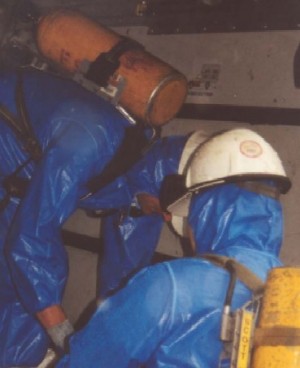
Demonstration of PPE at Bridging the Gap Construction Safety Conference Nov. 19, 2011

On Saturday Nov. 19, I visited a conference for construction safety workers who want to “bridge the gap” in their knowledge about the industry’s health and safety issues. I visited safety product vendors and service consultants at the trade show portion, then went to a seminar called Pre-Inspection to Ensure Your Protection.

A group of safety product demonstrators were stationed at tables where they gave 12-minute demos on what construction safety officers need to look for when inspecting personal protective equipment. The session was led by sales manager Derek Malone, of HazMasters.

“As a safety officer, you’re going to deal with multiple trades coming in with safety equipment,” Derek told me, as he timed the sessions and led attendees to their next PPE demo station.

He said the session “gives a general introduction to some of the things to look for” when they inspect equipment used for gas detection, fall protection, and other types of PPE.

Networking for construction safety pros

Derek explained the spark behind the conference.

“The original intent of Bridging the Gap was to give construction safety officers the vision to see what else they can do – other than taking what they learned in their programs – and continue to evolve it and network with other officers and safety manager who have got to a higher level,” he said. “Some of the concerns were younger CSOs coming out and not knowing what was available as a career path. Sometimes they got to a job and didn’t have the support. They have the ability to speak with somebody here – maybe a manager for a larger company – who says ‘This is the support you should have.’ Then they can see what they can work towards.”

Stay tuned for more stories from people I met at the conference that was sponsored by WorkSafeBC in partnership with the BC Construction Safety Alliance, BC Association of Restoration Contractors, Canadian Society of Safety Engineering, HazMasters, Applied Science Technologists and Technicians of BC, and BCIT.

City of Kamloops stages chlorine leak

November 22, 2011

From Chlorine Safe Work Procedures, by WorkSafeBC

Chlorine leaks can be deadly, so a proper response is critical.

Jennie Inkster, safety coordinator for the City of Kamloops, completed a set of written emergency procedures for dealing with chlorine leaks. Then she tested them with the local fire department during NAOSH Week 2011.

“Our fire department always likes to practise because once chlorine gets out – leaks don’t get better, they get worse,” Jennie told me on the phone from Kamloops.

“The fire department comes at it from a different angle than I do. I’m worried about the worker’s safety – and they’re worried about their members and how they’re going to approach the scene. They have to evacuate if they’ve got a cloud of chlorine floating.”

Jennie and her team developed a booklet of information for responding to this type of emergency, including all maps and phone numbers of people who may need to be evacuated. Now each each fire station and haz mat truck has a copy.

“That was a suggestion from the fire department – so they could look at terrain, who they’re going to need to evacuate first, and an overall map of where the actual chlorine is located and the closest houses to that,” Jennie said.

NAOSH Week theme for 2011

Planning your route to the emergency

Jennie said they discovered another route that the fire department could take, if needed.

“There’s one way in that the City uses, but there’s another way we can come at it depending on which way the wind is. You might not necessarily be able to get at it from our main entrance that we use right now and it’s basically through a farmer’s field,” Jennie said. “But they have to be careful. It depends on the type of year because their trucks are so heavy they could get stuck. Some of that stuff came up and was discussed and it was really great.”

NAOSH winners

This exercise, along with other activities at work and in the community, earned Kamloops three NAOSH Awards: Best New Entry at the national level and in BC’s Local Government category and Best Presentation of Theme. Congratulations to all!
See Chlorine Safe Work Practices by WorkSafeBC

Putting people first at work

November 17, 2011

Howard Behar. Photo credit: Mike Archer/FIOSA-MIOSA

If you put people first, everything else will fall into place – including safety.

That’s the message from Howard Behar, the former president of Starbucks who helped grow the company from 28 stores to more than 15,000 on five continents. I recently spoke with him on the phone and also at the October 27 Leading Performance Conference, hosted by the FIOSA-MIOSA Safety Alliance of BC.

In his talk, “The Importance of People Over Profits,” Howard told delegates about his experience of evolving as a leader while remaining true to his personal values. He’s distilled his knowledge into 10 principlesof personal leadership that he speaks about frequently and he wrote a book about this topic, called It’s Not About the Coffee.

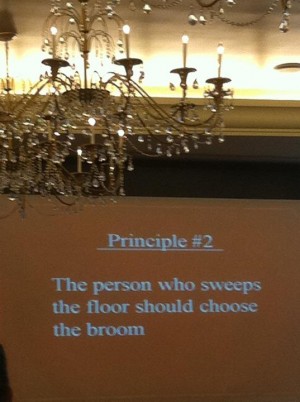
Howard Behar's presentation slide at the Leading Performance Conference in Vancouver Oct. 27

One principle – “The person who sweeps the floor should choose the broom” – reminded me of a story I heard from a worker who was really frustrated that management had chosen new eye protection that wasn’t working for him. No one on the crew had been consulted, and they were upset about wearing the goggles that steamed up every time they went outside (which was often). They were supposed to be protecting his eyes, but they were actually obscuring his vision. He said management didn’t want to hear about it, which was “terrible for morale” because it made the workers feel like the employer didn’t care about them.

It’s this type of attitude Howard wants to change.

“People need a chance to use their creativity and to use their intellectual power to create something,” he told me on the phone. “They are human beings who have the capacity to achieve results beyond what is thought possible.”

I asked Howard what, in his view, was significant about a group of industry leaders getting together and signing the Health and Safety Leadership Charter.

“What makes it significant is that they’ve said, ‘Okay, we get it. We commit.’ It’s a public commitment to taking care of people,” he said. “I applaud the people who started this conference and are bringing together all these different organizations to commit to workplace safety. I think we need to do more of that.”

I agree. Thanks to Howard for sharing his message and taking the time to talk with me.

BC safety charter signals commitment

November 15, 2011

Paul Henning, vice president of Rio Tinto Alcan BC, signs the Health and Safety Leadership Charter

I had a chance to see history in the making on October 27 when 23 CEOs and senior managers signed BC’s first workplace safety charter in Vancouver. I was there to cover the event as a guest reporter for Canadian Occupational Safety Magazine Online and wrote this story about it.

This new Health and Safety Leadership Charter was introduced at the Leading Performers Conference hosted by the FIOSA-MIOSA Safety Alliance of BC. The Safety Alliance represents the province’s food processing and manufacturing industry, and their goal is 150 signatures on the Charter by 2015.

Newfoundland, Nova Scotia, Ontario, and Saskatchewan have their own safety charters already – and I’m glad to see BC join their ranks. By signing the Charter, industry leaders are making a public commitment to build a strong workplace safety culture for their employees, customers, and communities.

Injuries in manufacturing and food processing

The injury rate among BC manufacturers is 4.6 – nearly double the province-wide injury rate of 2.37, according to WorkSafeBC stats from 2008. The food processing sub-sector has an even higher rate of injury at 7.1 – and, fyi, that means for every person who works full-time in a one-year period, 7.1 out of 100 were injured.

In 2009, BC’s manufacturing sector paid $121 million in claims and the actual cost to employers is estimated at $605 million. The most common cause of injury was lifting, followed by repetitive movement, injuries from sharp edges, and slips, according to a 2010 Safety Alliance survey.

Sandra Oldfield, CEO & President, Tin Horn Creek Vineyards. Photo credit: Mike Archer/FIOSA-MIOSA

“Simply put, there are too many individuals whose lives, well-being, personal finances, and health are being adversely affected by the poor health and safety record of our industry,” said Safety Alliance CEO Lisa McGuire, who described the Charter as a starting-point for leaders.

At the conference, speakers and attendees discussed how health and safety can lead to increased business sustainability, profitability, and corporate performance. CBC’s Kathryn Gretsinger moderated panel discussions on topics like the moral and legal cases for safety, and there were many more conversations during networking breaks.

Congratulations to the Safety Alliance on the success of their inaugural signing. I’ll follow up and let you know how it’s going.

Following up on safety goals

November 10, 2011

Tourism Whistler stages a mock rescue during NAOSH Week 2011

NAOSH Week organizers suggest different ways to participate – one of which is “setting new goals for workplace health and safety.”

That’s what the health and safety committee did at Tourism Whistler, winner in BC’s NAOSH Week Tourism/Hospitality category.

I learned about Tourism Whistler’s goal-setting from Dennis Ranada, senior building operations manager and OHS committee chair. He and his team work for safety at this non-profit organization that represents 7,000 members who own, manage, and operate properties or businesses on resort lands. They also operate the Whistler Conference Centre, Whistler Golf Club, Whistler Visitor Centre, and Coast Mountain Reservations.

Following up on promises

Dennis chairs the 12-member OHS committee that includes reps from each department. In 2010, the committee asked all departments to submit a list of safety commitments in writing – then, a year later, they went back and checked progress “to make sure they kept their promise.”

Dennis said their overall goals are to “minimize incidents, reduce our WorkSafe premiums, take a leadership role in the community and most of all, go home to our families safe and in one piece.”

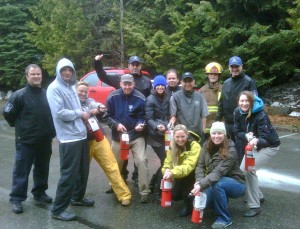
Fire extinguisher training with staff of Whistler Tourism during NAOSH Week 2011

During NAOSH week, staff also took part in fire extinguisher training, fire drills, earthquake drills, nutrition seminars, yoga, and an ergonomic seminar with desk site assessments.

Using foresight before work orders

Dennis encourages other operations managers to “take the leadership role in promoting H&S in their organization” and work closely with the loss and prevention officers who tend to be the leaders of OHS programs.

“Both roles should work side by side. Most of the deficiencies, action items, and investigations fall on the operations/maintenance personnel to complete, so it would be wise to have the manager be more proactive to mitigate potential hazards versus getting the work orders after the fact,” Dennis said.

For more info, read Managing Employee Performance at Tourism Whistler on the website of go2 – the BC tourism and hospitality industry’s human resource association.

Congratulations Tourism Whistler and thanks again to Dennis.

Congrats to 2011 NAOSH winners in BC

November 08, 2011

Dennis Ranada, senior building operations manager at Tourism Whistler, NAOSH winner in Tourism/Hospitality

I found lots of great stories to track down and tell after looking at the list of NAOSH and Canadian Society of Safety Engineering (CSSE) Achievement Recognition awards. Winners were honoured October 20 at the 2011 Safety Forum and Awards ceremony in Langley, and I’ll be following up to find out more about what they did.

Then I’ll tell you – during the next few weeks – so you might want to subscribe to this blog if you haven’t already. Just click the Subscribe Now button over there on the right.

A preview of stories to come

In my next post, I’ll tell you about Tourism Whistler – winner in the Tourism/Hospitality category. In 2010, WT’s health and safety committee asked each department in the organization to submit their health and safety commitments – then they “followed up to make sure they kept their promise,” said Dennis Ranada, senior building operations manager, in charge of OHS at Tourism Whistler.

NAOSH Week 2011

I’ll tell you more about the City of Kamloops, winner in the Local Government category after I talk with their safety coordinator Jennie Inskter. One of their many NAOSH Week activities was a chlorine leak exercise including many departments of the City, emergency personnel, and local residents.

I’m also looking into the story of Versacold Logistics- winner in the Tranport of Goods category and Best Overall entry. Mike Stephens, OH&S manager of the Pacific and Prairie Region is going to tell me more about what they did – and I’m particularly curious about their games for staff that show what it’s like to do sports after losing an eye or limb.

Stay tuned for more – and congratulations to all!

Union safety rep recalls youth attitudes

November 03, 2011

Sharon Barbour is a national union rep for the Canada Employment and Immigration Union

At this point in the year, many young workers are back in school after summer jobs – but others work throughout the year.

People in this age group (15 to 24) have a higher injury rate, and here in BC, on average 28 young workers are injured every day, says WorkSafeBC. That’s why folks like Sharon Barbour visit high schools and job centres to talk with young workers about their rights. She worked with the BC Federation of Labour’s Young Workers program a few years ago and has many good memories of the young people she met.

“Some of them were kids who had never had jobs, and they were already saying: ‘Ya but if I start refusing work, he’s just going to get someone else to do it,” said Sharon, who told youth it’s illegal for an employer to do that.

Nick Perry in WorkSafeBC's Lost Youth video

“The employer may not be looking out for you the way your teachers do. The employers are trying to make money and sometimes they might ask you to do really stupid things.”

Using video to spark conversation

Sharon showed them Lost Youth – a WorkSafeBC video about four young people injured at work. Then she started by asking who was at fault in the videos.

“The first thing they came up with was: ‘He shouldn’t have been standing there’ and ‘He should have known not to do that.’ Their first instinct is to blame the kids,” she said. “Then I asked: ‘Yeah, but was she trained on this machine? Did she understand how it was supposed to be used? Was there anyone there with her helping?’ I showed them what the employer could have done.”

Thanks to Sharon and all others looking out for our young workers. Here’s the full version of Lost Youth on YouTube (with language that may be offensive to some) that supervisors, educators, and parents can use as conversation openers.

Free e-resource for supervisors

November 01, 2011

From Supervising for Safety

Today we have more ways than ever to share what we know. The web and social media make it easy to work with others to create change and exchange information that has social value.

A great example of this is a new, free e-learning resource from WorkSafeBC: Supervising for Safety, a nine-module online course for supervisors.

The program originated with a group of labour, businesses, and WorkSafeBC subject-matter experts – all who understand the challenges faced by new supervisors.

I read about the course in a press release, then I emailed Mike Tasker to find out more. He’s a WorkSafeBC safety officer based in Prince George and one of the program’s co-creators.

“When we talk to supervisors, many recount stories of fear when they took over. They talk about how scared they were of making a mistake and not really knowing where to turn when they had questions or problems,” Mike said.

“All too often a company will promote a long-term or productive worker thinking that he/she will automatically be an effective supervisor. But from our experience and from talking to other supervisors, we know that for most they flounder a lot in their first years – some for longer than that.”

WorkSafeBC Info-flip

Info delivery evolves with technology

Mike and others at WorkSafeBC responded to this need and created a two-day course that was delivered in person. Then they distilled the knowledge into an info-flip that became a top seller. Now, the new e-course is the latest manifestation of this knowledge sharing.

“We decided that we should broaden the access to the information and take it into the age of web-based communication,” Mike said. “We believe that if a company is going to be successful in safety, the key is to invest in their supervisors. We’ve often said that the employer sets the safety vision, but the supervisor gives voice to that vision.”

The e-course’s nine modules include:

  1. Safety Management Systems
  2. Keys to Effective Safety Supervision
  3. Communication Skills
  4. New/Young Worker Education and Training
  5. Substance Abuse
  6. Musculoskeletal Injury Reduction
  7. Workplace Evaluations
  8. Incident Analysis
  9. Claims and Disability Management Programs

Mike told me the online program – launched in September – has had interest from “around the world.” Stay tuned for news from a supervisor who used the online program and speaks very highly of it. If you’ve used the program, I’d be very interested to hear your view so please leave a comment here or email me.